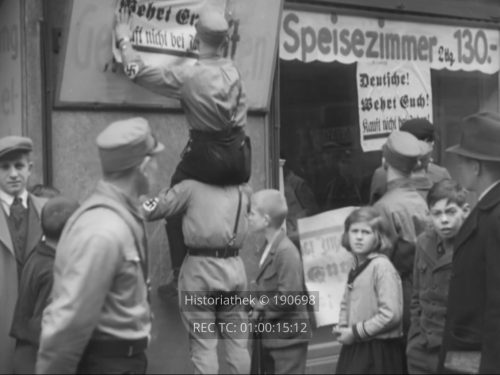
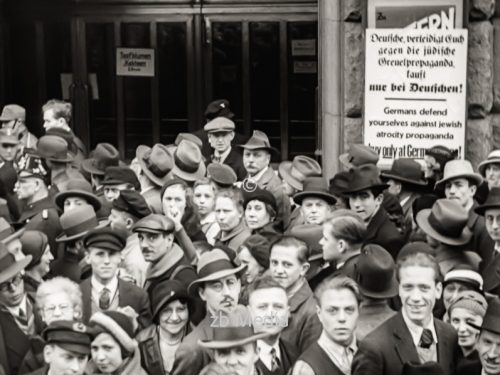
Anti-Semitic boycott campaign Berlin 1933
Anti-Semitic boycott campaign Berlin 1933 – original photograph
55,00 € plus VAT.
ⓘ All photos are subject to licensing. View License Terms / GTC ansehen
Anti-Semitic boycott campaign Berlin 1933. On 1 April 1933, an anti-Semitic boycott campaign organised by the NSDAP took place in Berlin and throughout Germany. This action was directed against Jewish businesses, doctors and lawyers and was one of the first systematic measures taken by the Nazis against the Jewish population after their seizure of power. The aim of the action was to begin the economic isolation of the Jewish population and to strengthen anti-Semitic sentiment in society.
SA men (Sturmabteilung) positioned themselves in front of Jewish shops, surgeries and law firms and prevented customers from entering them. Signs with anti-Semitic slogans such as ‘Germans, don’t buy from Jews’ were put up. Shop windows were also daubed with Stars of David and other anti-Semitic symbols. The campaign was accompanied by intensive propaganda in the press and on the radio, which defamed Jewish fellow citizens and portrayed them as enemies of the German people. The boycott campaign led to considerable economic damage for the Jewish businessmen and professionals affected. The action was met with great indignation abroad and contributed to international criticism of the National Socialist government. This boycott action was a harbinger of further anti-Jewish measures and laws that further intensified the disenfranchisement and persecution of the Jewish population in Germany and later in the territories occupied by Germany in the following years. The action marked the beginning of the institutionalised discrimination that ultimately led to the Holocaust.